


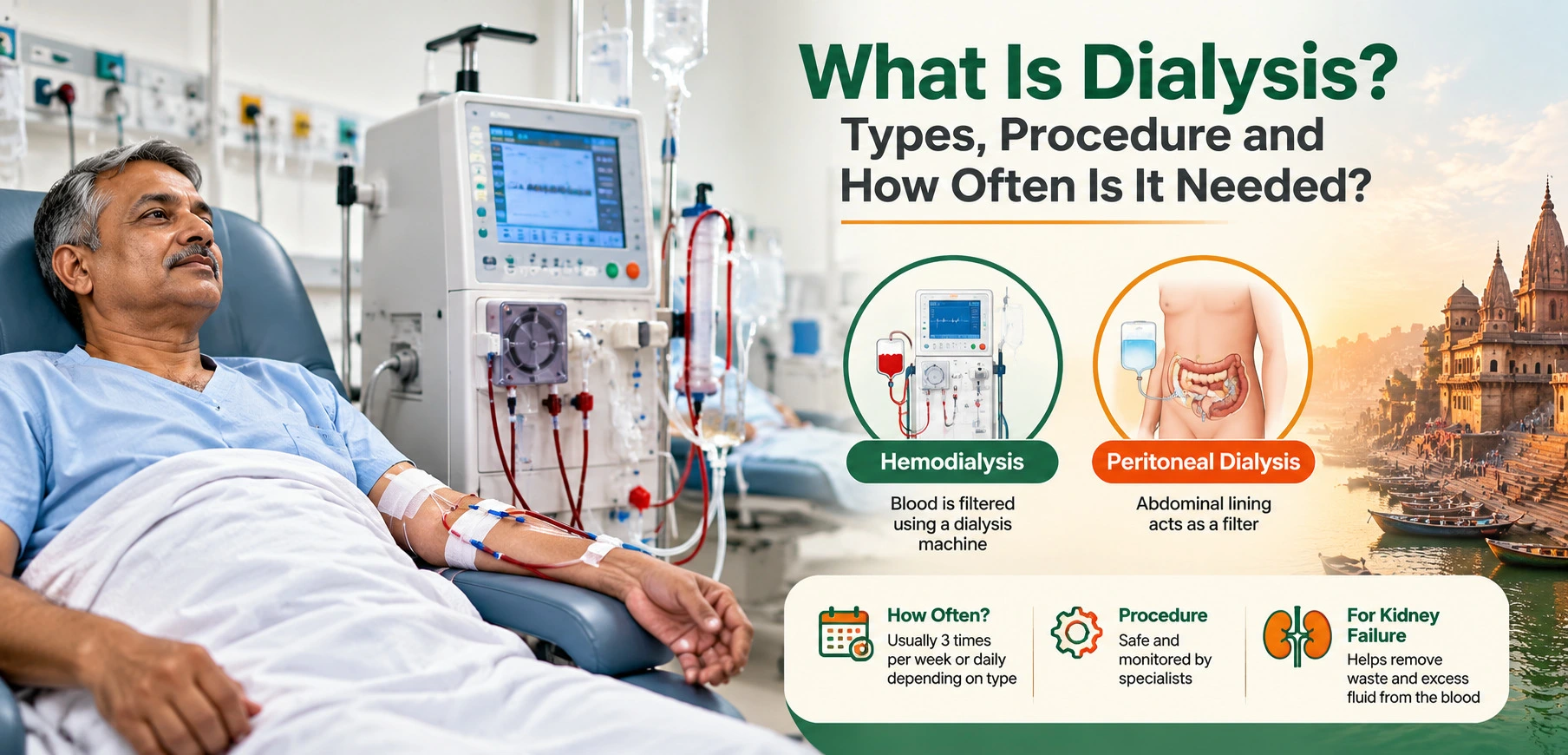
What Is Dialysis? Types, Procedure and How Often Is It Needed?
Dialysis is a medical treatment that helps remove waste products and excess fluid from the blood when the kidneys cannot perform these functions adequately. It may be required for people with advanced kidney failure and sometimes temporarily during serious illness.
Understanding the different types of dialysis, the procedure, and how often treatment is needed can help patients and families prepare. This guide also discusses dialysis treatment in Varanasi for patients travelling from Eastern Uttar Pradesh, Bihar and other regions.
What Is Dialysis and Why Is It Needed?
Healthy kidneys filter the blood, remove waste substances, regulate fluid and electrolyte balance, and help maintain normal body functions.
When kidney function becomes severely reduced, waste products and extra fluid can accumulate in the bloodstream. Dialysis helps replace some of the kidneys' filtering functions.
Dialysis does not cure permanent kidney failure. However, it may support patients while they receive ongoing treatment, wait for a kidney transplant, or recover from certain reversible kidney conditions.
What Are the Main Types of Dialysis?
1. Hemodialysis
Hemodialysis uses a machine and a special filter called a dialyzer to clean the blood. Blood travels through the filtering system and then returns to the body.
Hemodialysis is commonly performed at a dialysis center, although some patients can receive home hemodialysis after appropriate training.
Conventional in-center hemodialysis is frequently scheduled three times per week. Each session often lasts approximately three to five hours.
2. Peritoneal Dialysis
Peritoneal dialysis uses the lining of the abdomen, known as the peritoneum, to filter waste products and excess fluid.
Special dialysis fluid is introduced into the abdomen through a catheter. After a prescribed period, the fluid is drained and replaced.
Peritoneal dialysis is usually managed at home with appropriate training and clinical supervision. Treatment is generally performed every day.
Hemodialysis vs Peritoneal Dialysis
| Factor | Hemodialysis | Peritoneal Dialysis |
|---|---|---|
| Method | Blood is filtered using a dialysis machine. | The abdominal lining acts as a filter. |
| Schedule | Commonly three sessions per week at a center. | Generally performed daily. |
| Access | Vascular access such as a fistula or catheter. | A catheter placed in the abdomen. |
| Location | Dialysis center or selected home settings. | Usually at home after training. |
How Is Hemodialysis Performed?
- Initial assessment: The care team reviews weight, blood pressure, symptoms and access condition.
- Connection: The dialysis system is connected using suitable vascular access.
- Blood filtration: Blood passes through the dialyzer, where waste and extra fluid are removed.
- Monitoring: Medical staff monitor the patient and machine.
- Completion: Treatment ends according to the prescribed schedule, and the patient receives follow-up instructions.
How Often Is Dialysis Required?
The dialysis schedule depends on kidney function, medical condition, dialysis method, fluid balance and test results.
Conventional In-Center Hemodialysis
Many patients receive treatment three times each week. However, individual prescriptions may differ.
Home Hemodialysis
Some patients have shorter but more frequent sessions, while others may use longer overnight schedules. Specialist guidance and training are essential.
Peritoneal Dialysis
Peritoneal dialysis generally involves daily treatment, either through manual exchanges or an automated machine.
Temporary Dialysis
Patients with acute kidney injury may require dialysis temporarily. The frequency and duration depend on the severity of illness and kidney recovery.
When Might a Doctor Recommend Dialysis?
A doctor evaluates the patient's symptoms, kidney function, laboratory reports and overall medical condition.
- Persistent fluid overload or breathing difficulty.
- Dangerous potassium imbalance.
- Severe disturbances in blood acidity.
- Symptoms caused by waste accumulation.
- Advanced kidney failure with significant complications.
- Certain severe cases of acute kidney injury.
Learn more about the Nephrology & Dialysis Department at Sudha Surgical Hospital.
What Happens Before the First Dialysis Session?
Preparation may involve blood tests, kidney function assessment, review of medicines, vascular access planning and discussions about the treatment schedule.
Patients may also receive individualized dietary advice related to sodium, potassium, phosphorus, protein and fluid intake.
Can Patients Continue Normal Activities?
Many patients receiving dialysis continue work, family activities and travel with appropriate medical planning.
Some people experience fatigue after hemodialysis and may need additional rest. Activity levels should be discussed with the treating medical team.
Dialysis Treatment in Varanasi for Eastern UP and Bihar Patients
Varanasi is a regional healthcare destination for people living in Eastern Uttar Pradesh and nearby districts of Bihar.
Patients from Chandauli, Ghazipur, Jaunpur, Mirzapur, Bhadohi, Sonbhadra, Mau and Ballia may consider specialist healthcare services in Varanasi.
Families from Buxar, Kaimur, Rohtas and other parts of Bihar may also travel to Varanasi for medical consultations and treatment.
Those exploring dialysis treatment in Varanasi can enquire with Sudha Surgical Hospital's Nephrology Department about current services and appointment availability.
Dialysis Planning for Domestic and International Visitors
Varanasi attracts visitors from across India and other countries. Patients who already require regular dialysis should plan treatment continuity before travelling.
Discuss the travel plan with your regular nephrologist and contact a qualified dialysis provider before your journey.
- Carry your recent dialysis prescription.
- Bring relevant laboratory reports.
- Keep details of dialysis access.
- Carry medication records and allergy information.
- Confirm treatment availability in advance.
- Verify payment and insurance arrangements.
How Much Does Dialysis Cost in Varanasi?
The cost of dialysis may vary depending on the facility, procedure, investigations, medications, consumables and individual medical requirements.
For patients travelling from Bihar or nearby Uttar Pradesh districts, transport, accommodation and repeat-session expenses may also affect the total cost.
Contact Sudha Surgical Hospital for current charges and written treatment estimates. No fixed dialysis tariff is claimed in this article.
Can Dialysis Be Stopped Once Started?
Some patients with acute kidney injury recover enough kidney function to discontinue dialysis under medical supervision.
People with irreversible kidney failure may need ongoing dialysis unless a suitable kidney transplant or another change in their medical condition alters the treatment plan.
How to Prepare for a Dialysis Appointment
- Bring your medical reports and prescriptions.
- Confirm appointment timing.
- Follow prescribed dietary and fluid restrictions.
- Ask which medicines should be taken before treatment.
- Inform the care team about new symptoms.
- Arrange transport and follow-up plans.
Enquire About Kidney Care in Varanasi
Contact Sudha Surgical Hospital for information about nephrology consultations, dialysis-related services and available appointments.
Book Appointment Call +91 9517027644Frequently Asked Questions
What are the two main types of dialysis?
The main types are hemodialysis and peritoneal dialysis. They use different methods to remove waste and extra fluid.
How long does a dialysis session take?
A conventional in-center hemodialysis session often lasts approximately three to five hours. Other methods have different schedules.
Is dialysis required every day?
Not always. In-center hemodialysis is often performed three times weekly. Peritoneal dialysis generally involves daily treatment.
Can Bihar patients seek dialysis care in Varanasi?
Yes, patients can enquire about services in Varanasi. Availability, medical requirements and charges should be confirmed before travelling.
Can international visitors arrange dialysis in Varanasi?
Visitors requiring dialysis should contact a suitable provider well before travel and coordinate with their regular kidney specialist.
Is dialysis always a permanent treatment?
Dialysis may be temporary in some acute kidney conditions or ongoing for patients with irreversible kidney failure.
How can I contact Sudha Surgical Hospital?
Call +91 9517027644 or visit the Contact page .
Final Thoughts
Dialysis helps manage waste accumulation and excess fluid when kidney function is severely reduced. Hemodialysis and peritoneal dialysis have different procedures, schedules and practical requirements.
Patients in Varanasi, Eastern Uttar Pradesh, Bihar and beyond should seek medical guidance when planning kidney treatment and follow-up care.