


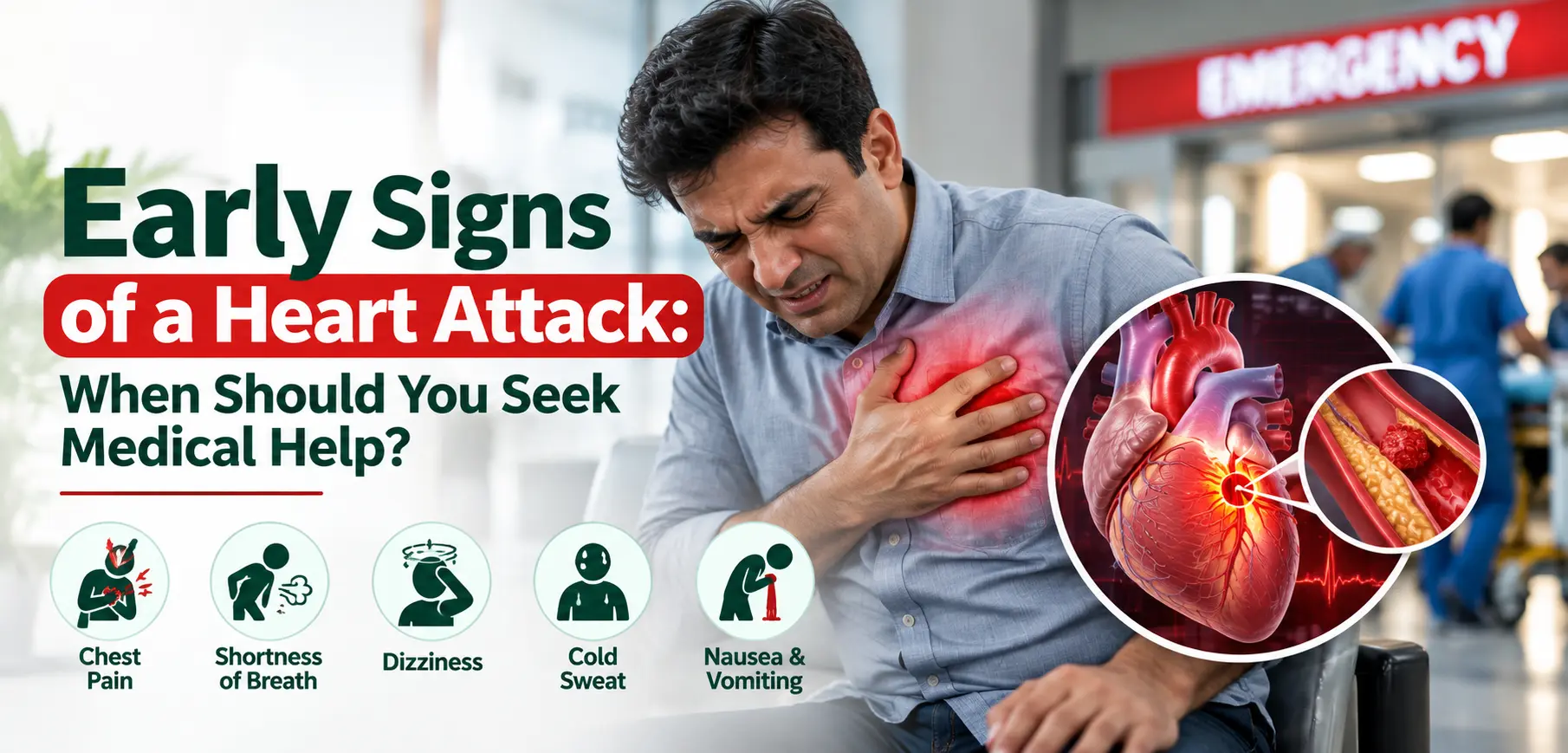
Early Signs of a Heart Attack: When Should You Seek Medical Help?
Recognizing the early signs of a heart attack is important because a heart attack is a medical emergency that requires prompt evaluation and treatment. Understanding the warning symptoms may help people avoid unnecessary delays in seeking medical help.
A heart attack occurs when blood flow to part of the heart muscle becomes severely reduced or blocked. When the heart muscle does not receive enough oxygen, damage can begin to develop.
Many people associate a heart attack with sudden, severe chest pain. However, symptoms can vary. Some people experience mild pressure, breathlessness, sweating, nausea, or discomfort in the arms, back, neck, or jaw.
What Is a Heart Attack?
A heart attack, also known as a myocardial infarction, happens when a coronary artery becomes blocked or blood supply to part of the heart is significantly interrupted.
A common cause is a blood clot forming after a plaque deposit in a coronary artery ruptures. Without timely medical treatment, the affected heart muscle can suffer permanent damage.
The seriousness of a heart attack depends on several factors, including the location of the blockage, how much blood flow is affected, and how quickly treatment begins.
What Are the Early Signs of a Heart Attack?
Heart attack symptoms are not identical for everyone. Some people experience multiple symptoms at the same time, while others notice only one or two warning signs.
1. Chest Pain or Pressure
Chest discomfort may feel like tightness, squeezing, heaviness, fullness, or pain. It can last several minutes or come and go.
2. Shortness of Breath
Difficulty breathing can develop during activity or while resting. It may occur with or without chest discomfort.
3. Arm, Neck or Jaw Pain
Discomfort can spread to one or both arms, shoulders, upper back, neck, or jaw.
4. Cold Sweating
Sudden cold sweating without an obvious cause may accompany a heart attack, especially with other symptoms.
5. Nausea or Dizziness
Some individuals experience nausea, vomiting, dizziness, weakness, or a feeling that they may faint.
6. Unusual Fatigue
Unexpected or unexplained tiredness may sometimes occur alongside other heart attack symptoms.
Emergency Warning: If a heart attack is suspected, contact emergency medical services immediately. Do not wait for symptoms to become severe.
Can a Heart Attack Happen Without Chest Pain?
Yes. Although chest discomfort is common, a heart attack does not always cause severe chest pain. Some people may experience symptoms such as breathlessness, unusual fatigue, nausea, or pain in the back or jaw.
Women, older adults, and people living with diabetes may sometimes have less typical symptoms. However, chest pain remains an important warning sign across these groups.
The absence of severe chest pain does not safely rule out a heart attack. If symptoms suggest a possible cardiac emergency, seek immediate medical evaluation.
Heart Attack vs Acidity: How Can You Tell the Difference?
Chest discomfort is sometimes mistaken for acidity, heartburn, or indigestion. Acid reflux can cause burning after meals, a sour taste, or upper abdominal discomfort.
However, a heart attack can also produce burning or indigestion-like discomfort. It is not possible to reliably distinguish these conditions at home based on symptoms alone.
New chest discomfort accompanied by breathlessness, sweating, weakness, or pain spreading to the arm or jaw should never be dismissed as gas.
Who Is at Greater Risk of a Heart Attack?
Several health conditions and lifestyle factors can increase the risk of coronary artery disease and heart attacks.
- High Blood Pressure: Persistent hypertension can damage blood vessels.
- Diabetes: High blood glucose levels can contribute to vascular damage.
- High LDL Cholesterol: LDL cholesterol contributes to plaque buildup in arteries.
- Smoking: Tobacco exposure increases cardiovascular risk.
- Physical Inactivity: Low activity levels can worsen several cardiovascular risk factors.
- Family History: A history of premature heart disease in close relatives may increase individual risk.
- Increasing Age: Risk usually increases with age, although young adults may also experience heart attacks.
What Should You Do If You Suspect a Heart Attack?
A suspected heart attack requires immediate medical attention. Delaying treatment may increase the risk of serious complications.
- Call Emergency Services: Request an ambulance immediately. In India, the national emergency response number is 112.
- Stop Physical Activity: Help the person rest comfortably while medical assistance is coming.
- Do Not Drive Yourself: Emergency medical transport is generally preferable when available.
- Follow Medical Instructions: Use medications such as aspirin only when directed by an emergency dispatcher or clinician.
- Respond to Cardiac Arrest: If the person is unresponsive and not breathing normally, follow emergency instructions for CPR and use an AED if available.
Important: Do not wait for a routine cardiology appointment or try home remedies when a heart attack is suspected.
How Do Doctors Diagnose a Heart Attack?
Doctors use a combination of symptoms, medical history, physical examination, and diagnostic investigations.
Electrocardiogram (ECG)
An ECG records the electrical activity of the heart. Certain patterns may suggest a heart attack, although one normal ECG does not exclude every case.
Cardiac Troponin Test
Troponin blood tests can help identify injury to heart muscle. Doctors may repeat testing when clinically necessary.
Echocardiography
An echocardiogram uses ultrasound to assess the structure and pumping function of the heart.
Coronary Angiography
Coronary angiography helps doctors examine the coronary arteries for significant narrowing or blockage. It may be recommended in selected clinical situations.
How Can You Reduce Your Risk of a Heart Attack?
Although not every heart attack can be prevented, healthy habits and proper management of medical conditions can help reduce risk.
- Monitor blood pressure regularly.
- Manage diabetes and blood sugar.
- Check cholesterol levels as recommended.
- Avoid smoking and tobacco products.
- Maintain regular physical activity appropriate to your health.
- Eat a balanced diet containing vegetables, fruits, whole grains, and healthier protein sources.
- Maintain a healthy sleep routine.
- Follow prescribed medication and regular medical follow-up.
When Should You Consult a Cardiologist in Varanasi?
A cardiology consultation may be appropriate for recurring chest discomfort, breathlessness during normal activities, palpitations, or assessment of cardiovascular risk factors.
Patients with diabetes, hypertension, high cholesterol, or a family history of heart disease may benefit from a heart health assessment.
Sudha Surgical Hospital in Varanasi provides information about its Cardiology Department and available medical services through its official website.
For non-emergency consultations, patients can contact the hospital to learn about appointments and specialist availability. Suspected heart attacks require emergency care instead.
Take Care of Your Heart Health
For routine cardiology consultations and information about hospital services, contact Sudha Surgical Hospital, Varanasi.
CARDIOLOGY DEPARTMENT CONTACT HOSPITALFrequently Asked Questions
What are the first signs of a heart attack?
Common warning signs include chest pressure, breathlessness, sweating, nausea, and discomfort in the arms, back, neck, or jaw.
Can a heart attack occur without chest pain?
Yes. Some people experience unusual fatigue, nausea, shortness of breath, or discomfort outside the chest.
Can young people have a heart attack?
Yes. Heart attacks are more common with increasing age, but younger adults can also be affected.
Can acidity feel like a heart attack?
Yes. Heart attack symptoms may resemble indigestion. Seek emergency care if a heart attack is suspected.
Can a normal ECG rule out a heart attack?
No. A normal ECG alone cannot rule out every heart attack. Doctors may perform additional investigations.
When should emergency care be requested?
Immediately when a heart attack is suspected. Do not wait for symptoms to worsen.


